
Your Pet's Medical History Shouldn't Disappear When You Change Veterinarians

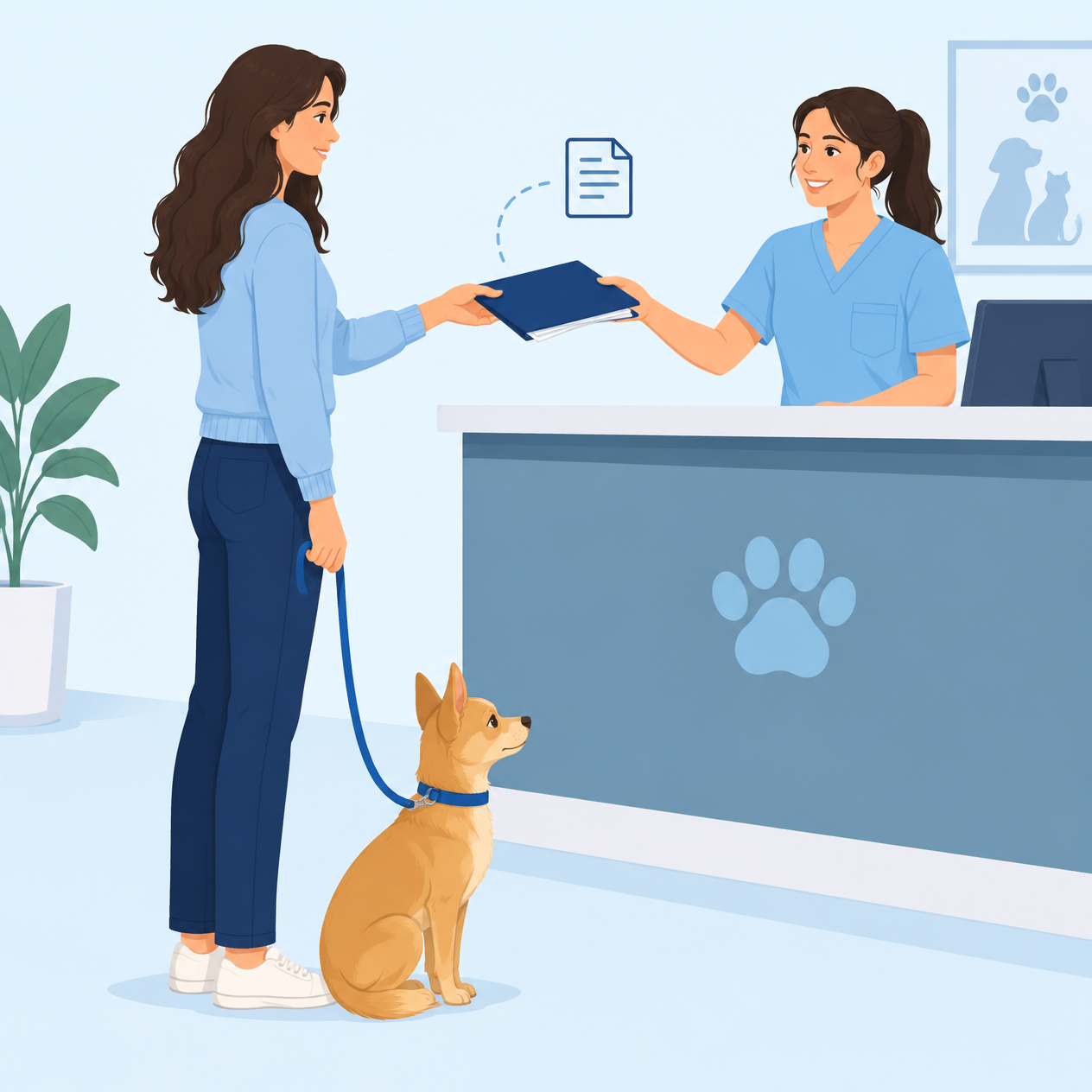
You're at your pet's first appointment with a new veterinarian, filling out the new-client form, and before you know it you've written, "She takes a small white pill twice a day... I think?"
I'm here to tell you this happens more often than you'd think, especially if your pet has been seen at several clinics, and you're definitely not alone. Having your pet's records organized before that first visit can take a lot of the pressure off.
"Does my new vet really need my pet's old records?"
Why Your New Veterinarian Actually Needs Your Pet's Records
Yes, your pet's old records really do matter!
I like to think of them as the blueprint of your pet's history. They give your new veterinary team context that would be hard for anyone to remember on their own.
Those records can include previously diagnosed conditions, medications and doses, vaccine history, lab results, surgical procedures, past reactions to vaccines or medications, and anything else relevant to your pet's health.
That history helps in very practical ways. A bloodwork value means much more when your vet can compare it with previous results. Knowing which treatments have already been tried for a dog's itchy skin gives your new team a more useful starting point, and knowing a cat once reacted to a vaccine lets them plan ahead.
Your own observations still matter too, especially changes in appetite, energy, or how a medication seems to be working. Together with the records, they help your vet tell the difference between something ongoing and something new.
And by no means are you expected to memorize your pet's entire history! The goal is simply to give your new veterinary team a clear picture of your pet so they can provide the quality care your pet deserves.
What to have ready
7 things to have ready for your new veterinarian
Current vaccine records
The most recent dates and any certificates you have, especially the rabies certificate. Your vet team may even give you the vaccine stickers if you ask!
Current medication list
Name, strength, dose, and how often it’s given. Include flea, tick, and heartworm prevention and any supplements.
Previously diagnosed conditions
Chronic conditions or recurring issues, even if they’re not currently being treated. The more we know, the better!
Previous test results
Bloodwork, urine, or fecal results, plus any X-ray or ultrasound reports.
Major surgeries or procedures
Surgery reports, dental procedures, hospital stays, or ER visit summaries.
Known allergies or past reactions
Especially reactions to vaccines or medications, and what happened.
Records from other veterinary providers
Emergency hospitals, specialists, and any other clinics your pet has visited.
Keep It All Organized with Wali
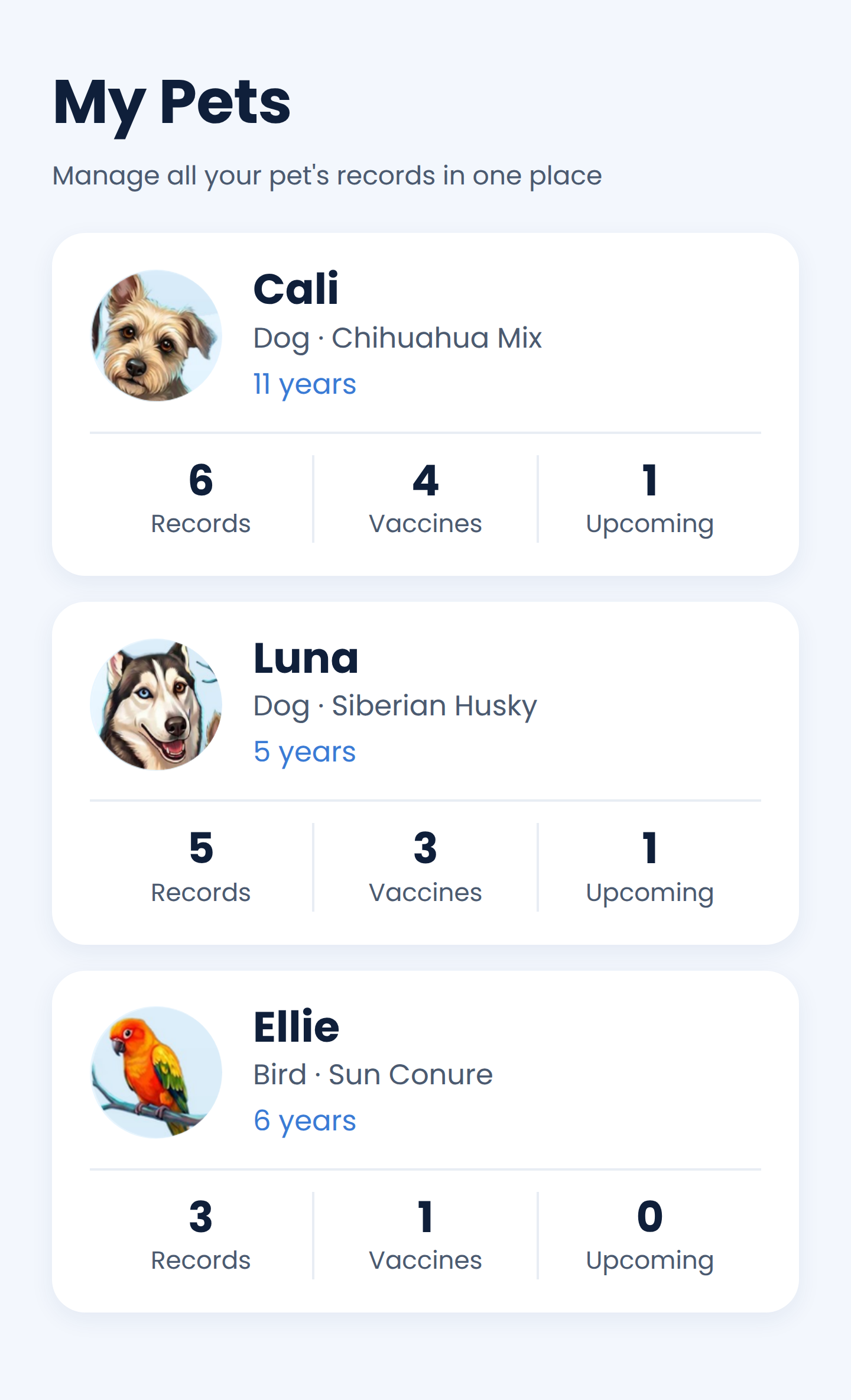
Those pages can pile up quickly when your pet has a long history. Wali gives you one place to keep your pet's records, vaccine information, medications, and your own notes, so they're easy to find and share when you establish care with a new veterinary team.
Before your first visit
5 things to do before your first appointment
Request your pet’s records ahead of time
Records can take a while to arrive, so don’t wait until the week you switch. Include emergency hospitals, specialists, and any other clinics your pet has visited. Even better, get in the habit of asking for a copy after each visit, so you’re never gathering years of records at once.
Confirm your new clinic received them
A quick call or text can save you from finding out at the appointment that nothing arrived.
Update your pet’s medication list
Double-check names, strengths, and doses, note any instruction changes, and remove anything your pet no longer takes. You can also keep a separate “discontinued medications” list for your new team.
Plan ahead for medication refills
Your new vet will usually need to examine your pet before prescribing, so contact your current clinic well before you run low and ask for enough to cover the switch.
Make note of anything still missing
If some records haven’t arrived yet, tell your new team where that care happened and share what you remember about the visit.
Switching Vets Shouldn't Mean Starting Over
Switching veterinary clinics is already a big transition, and scrambling for records at the last minute doesn't need to add to that stress.
Keeping your pet's records organized as you go, even just asking for a copy after each visit, means your new team can pick up right where the last clinic left off. That makes things easier for everyone, and most of all for your loved one.
Be ready for your next vet visit
All your pet's records. Right in your pocket.
Shareable in seconds.
Larissa Muñoz, DVM
Larissa Muñoz, DVM, MBA, is a veterinarian with more than five years of small-animal clinical experience. She now works as a veterinary consultant and medical reviewer, helping pet-health and veterinary technology companies create accurate, practical content for pet owners.
Larissa Muñoz, DVM, is a paid Wali contributor. This article is for general education and isn't a substitute for veterinary advice.