
Your Dog Vomited Again. Would You Remember When the Last Episode Happened?


Imagine you're in the exam room with your dog, and your vet starts asking questions:
"When did Buddy last vomit? Has he been eating and drinking? What did it look like?"
In my years in clinical practice, I watched so many owners go quiet at these questions. Not because they weren't paying attention, but because they were worried and stressed.
I always told them the truth: "When something is wrong with my own dog, I start freaking out and forget that I'm the veterinarian!"
You don't need a perfect history. A few notes can go a long way.
Why your vet asks so many questions
Knowing your dog is throwing up is a start. Details like timing, frequency and patterns give your vet a much clearer picture, and help them decide which exams or tests make sense.
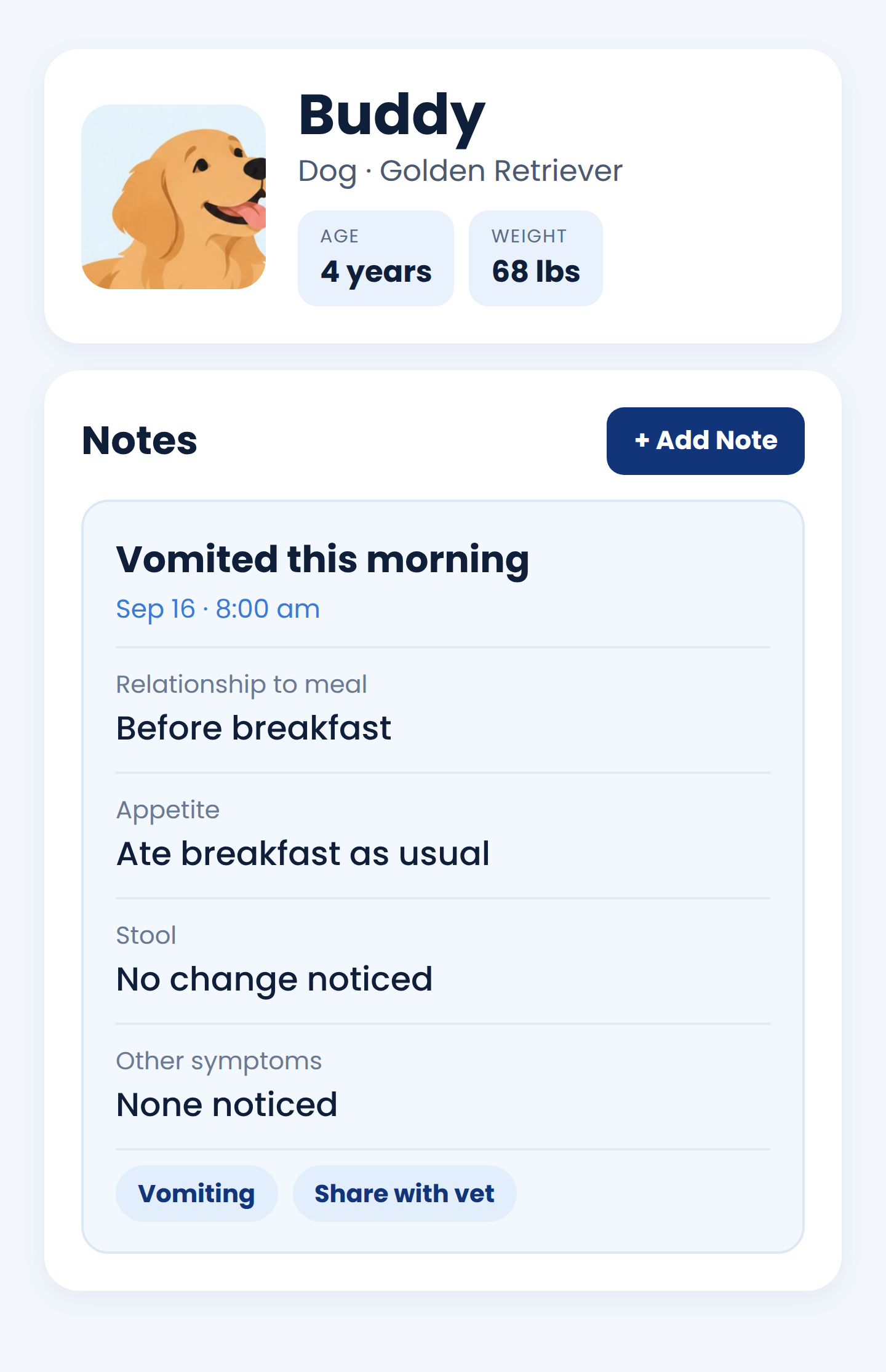
Keep it all in one place with Wali Notes
Write down details as they happen instead of piecing the timeline together days later. Add each new episode to the same history, then share your notes with your vet.
Your vet may still have follow-up questions, and that's a good thing. You'll just be starting from a much stronger place.
When to call your vet right away
Tracking is helpful, but it should never delay care. Call your vet or an emergency hospital if your dog has:
- Repeated vomiting
- Trouble keeping water down
- Major lethargy or weakness
- Belly pain or swelling
- Blood in the vomit
- Possibly eaten something toxic or a foreign object
- Repeated retching with nothing coming up
Not sure if it can wait? Call and describe what you’re seeing. You don’t have to decide alone.
A clearer history makes a stressful visit easier
Next time your vet asks “When did this start?”, you won’t have to guess. A few quick notes turn a vague memory into a clear history, so you can focus on getting your dog the care they need.
Be ready for your next vet visit
All your pet's records. Right in your pocket.
Shareable in seconds.
Larissa Muñoz, DVM
Larissa Muñoz, DVM, MBA, is a veterinarian with more than five years of small-animal clinical experience. She now works as a veterinary consultant and medical reviewer, helping pet-health and veterinary technology companies create accurate, practical content for pet owners.
Larissa Muñoz, DVM, is a paid Wali contributor. This article is for general education and isn't a substitute for veterinary advice.

.svg)

